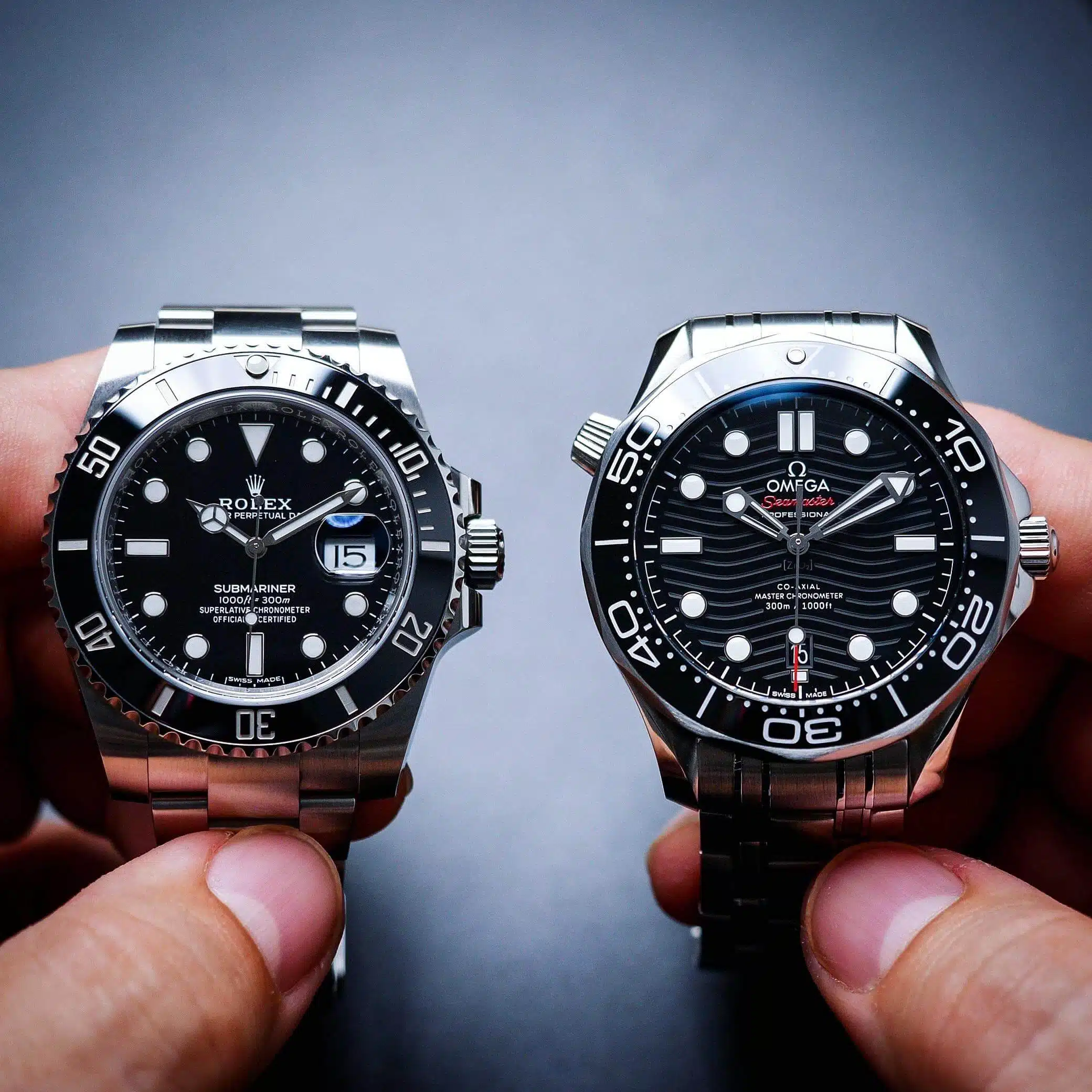
Omega vs Rolex. Two brands with rich history, they stand as the two most recognised watch brands globally. Rolex boasts 100% international brand awareness, and Omega follows with brand recall reaching 70%. These Swiss legends offer similar 5-year warranties, yet their journeys tell distinctly different stories.
The rivalry between Omega and Rolex goes beyond simple comparison. It showcases two unique watchmaking philosophies. Louis Brandt opened Omega’s first workshop in 1848. Hans Wilsdorf founded Rolex much later in London at the time of 1905[-3]. Rolex commands the resale market with the highest resell value of any watch brand. Omega carved its own path and became NASA’s chosen timekeeper for all manned space missions.
Both brands challenged watchmaking limits uniquely. Rolex created the first waterproof wristwatch case with their Oyster design. The company’s first wristwatch earned the Swiss Certificate of Chronometric Precision in 1910. Omega became the Olympic Games’ official timekeeper. The brand surpassed Rolex’s legendary depth record by 12 meters with their Seamaster Planet Ocean Ultra Deep Professional.
This complete comparison covers everything from heritage and design to movement technology and market value. You’ll discover which Swiss legend might deserve a place on your wrist.
These two horological giants share a rich history across different centuries. Their corporate structures and milestone achievements shape their unique identities today.
Louis Brandt started a small workshop in La Chaux-de-Fonds, Switzerland that became Omega in 1848. The company’s original name was Louis Brandt et filis. Their groundbreaking movement earned the name Omega in 1894, which became the company’s official name in 1903. Omega had already spent fifty years mastering watchmaking at this point.
Rolex’s story differs from Omega’s Swiss heritage. Hans Wilsdorf started his timepiece distribution company in London in 1905. The company changed its name from Wilsdorf & Davis to Rolex in 1908. Heavy British export duties on precious metals forced the company to move to Geneva after World War I.
Both brands now operate under distinct ownership models. The publicly traded Swatch Group owns Omega, generating annual revenues close to $2.6 billion. The Hayek family controls the group through key shareholdings.
Rolex takes a unique approach to ownership. The private Hans Wilsdorf Foundation has run the company since 1944, created after Wilsdorf’s wife’s death. This charitable foundation earns estimated annual revenues of $10.5 billion. Rolex dominates 32% of the Swiss luxury watch market.
Both manufacturers boast remarkable technical achievements. Buzz Aldrin made history wearing his Omega Speedmaster Professional during the 1969 moon landing. Omega had already become the Olympic Games’ official timekeeper in 1932.
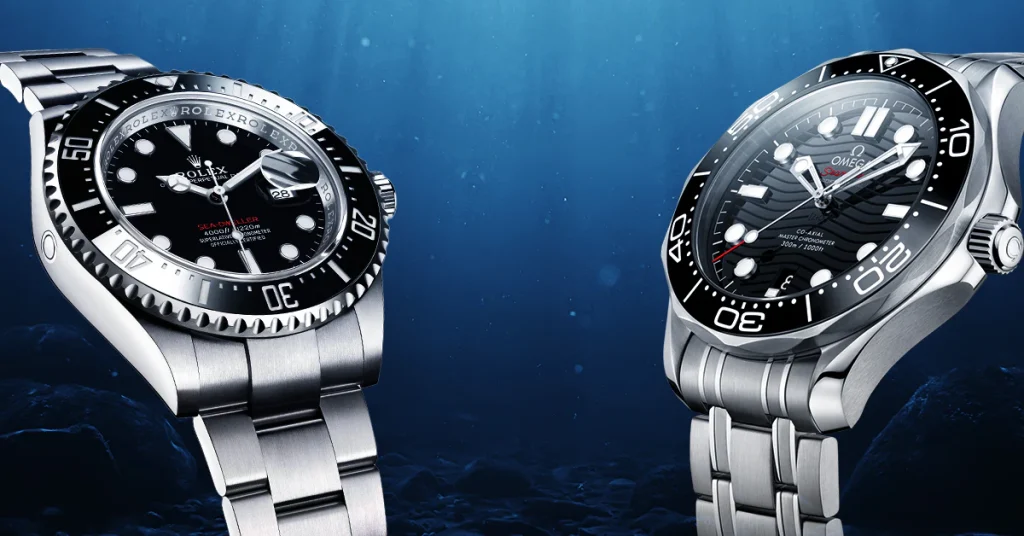
Rolex challenged underwater limits repeatedly. The experimental Deepsea accompanied the Bathyscaphe Trieste to Challenger Deep in 1960, reaching 10,916 meters. Omega’s Planet Ocean Ultra Deep claimed a new record in 2019. It reached 10,925 meters in the Mariana Trench, beating Rolex’s depth record by just 9 meters.
Rolex and Omega’s design philosophies show clear differences that emerged from decades of competition.
These Swiss icons stand apart in their physical quality. Rolex prefers proprietary alloys and solid construction. The brand uses Oystersteel (904L surgical-grade steel) exclusively. This material will give a better corrosion resistance and polish retention compared to Omega’s typical 316L stainless steel. Rolex manufactures its own gold alloys including Rolesor and Everose. Omega responds with Sedna gold—their distinctive rose gold alloy that contains palladium to maintain its color longer.
Omega welcomes experimentation and uses ceramic for many dials (marked with [ZrO2]). Both brands have developed their own ceramic bezel technologies. Rolex’s patented Cerachrom and Omega’s innovative Liquidmetal stand out. Omega’s process involves injecting molten metal into ceramic under extreme heat to create a smooth, unified surface.
The brands’ bracelet choices highlight more differences. Rolex’s iconic three-link Oyster (introduced 1947) and five-link Jubilee (debuted 1945) bracelets serve sports and dress models respectively. Omega provides more variety with NATO straps and rubber options that appeal especially to divers and active lifestyles.
Omega shows more boldness in dimensions with cases measuring up to 45.5mm. Rolex keeps its sizing conservative—the Submariner comes only in 40-41mm variants. Their largest models (Deepsea Sea-Dweller and Yacht-Master II) reach just 44mm.
The inner workings of these horological powerhouses show key differences in how each brand achieves precision timekeeping through unique technical approaches.
These manufacturers deliver beyond standard chronometer specifications through different certification paths. Rolex’s Superlative Chronometer designation ensures accuracy within -2/+2 seconds daily. Omega takes a dual approach that includes COSC certification first and then advances to METAS Master Chronometer standards at 0/+5 seconds per day.
The latest Rolex calibers hold a slight edge with their 70-hour power reserve. Omega’s modern Co-Axial movements provide 60 hours of power. Your Rolex can sit untouched over a weekend without needing a reset, which adds practical value.
Omega stands out with its exceptional magnetic resistance. Rolex’s Milgauss can handle 1,000 gauss using a Faraday cage shield. Omega’s Master Chronometer movements resist fields of 15,000 gauss—fifteen times stronger—by using advanced silicon components instead of protective casing.
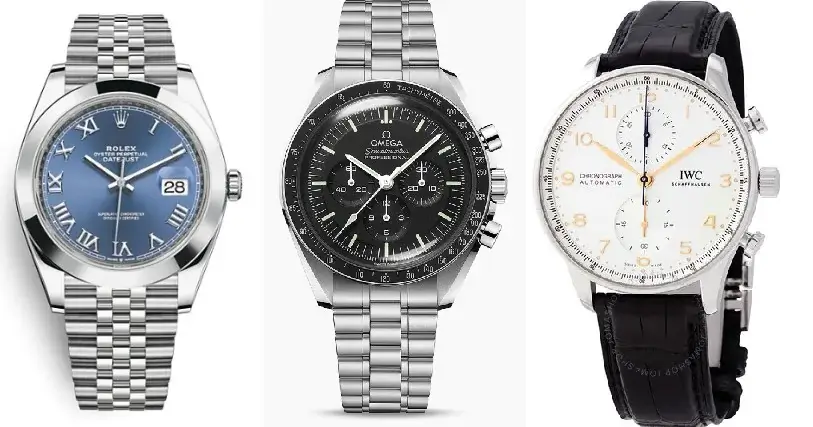
The legendary Speedmaster Moonwatch keeps its traditional manual-wind caliber 3861 authentic, with anti-magnetic protection up to 15,000 gauss. The Rolex Daytona features the self-winding caliber 4130, a reliable automatic movement that makes daily life easier by eliminating manual winding.
Luxury watch collectors and enthusiasts consider more than just technical specs and design. The financial worth and public image of these timepieces play a major role in their buying decisions.
The secondary market reveals a lot about long-term value. Rolex watches maintain or surpass their retail prices consistently. Steel sports models like the Submariner, GMT-Master II, and Daytona lead this trend. The brand’s strict distribution creates a lack of supply that pushes second-hand values higher. Many popular models gain 80-120%+ over their original price.
Omega watches usually drop 30-50% in value after the original purchase. All the same, this price drop creates great deals for pre-owned buyers who want quality without paying premium prices. Some limited editions break this pattern and gain value, especially Speedmaster “Moonwatch” variants and James Bond Seamaster editions.
Interbrand studies show Rolex has achieved complete global brand recognition with 100% international awareness. Omega stands as no match for this reach but holds a strong second place among watch brands with about 70% brand recall. This 30% gap represents billions in market value perception.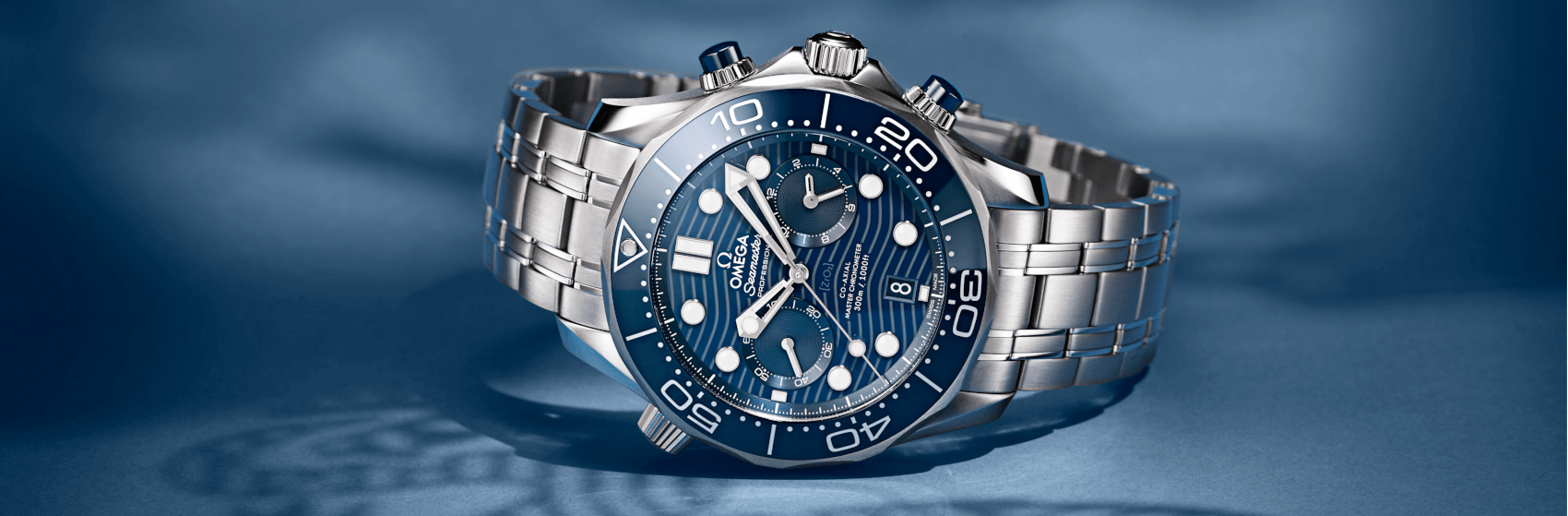
Both brands build mutually beneficial alliances with celebrities to strengthen their image. Rolex’s ongoing partnership with tennis legend Roger Federer showcases excellence and timeless appeal. Omega pairs with George Clooney to represent sophisticated elegance.
These partnerships work best with authentic connections. Celebrities who truly appreciate watches are a great way to get brand message across compared to those who just collect fees.
The biggest market difference lies in availability. Popular Rolex models need long waitlists at authorised dealers that can stretch for years. This artificial lack drives both prestige and investment potential.
Omega takes a more straightforward approach. Most models can be bought right away through authorised dealers, often with special deals or discounts. This direct approach appeals to buyers who want their watches now rather than waiting for investment returns.
A deep look at the competition of Omega vs Rolex, two Swiss watchmaking titans, shows the choice between Omega and Rolex comes down to what you value most in a timepiece. Both brands showcase exceptional craftsmanship with centuries of combined state-of-the-art developments behind them.
Rolex’s unmatched brand recognition, superior resale value, and proprietary materials like Oystersteel and Everose gold make it stand out. The brand’s conservative approach to design changes and their controlled supply have created what many consider an investment-grade product category. Buyers who want prestige and potential appreciation will naturally lean toward Rolex.
Omega brings technical advantages that watch enthusiasts love. The brand’s magnetic resistance stands 15 times stronger than Rolex’s. Their experimental design philosophy and historic achievements like the moon landing give them authentic horological credentials. On top of that, their ready availability and relative value attract collectors who value technical state-of-the-art over investment potential.
The brands’ ownership structures paint an interesting picture. Rolex operates under a charitable foundation, while Omega functions within the publicly-traded Swatch Group. These different business models shape their distribution strategies and pricing decisions.
My analysis revealed a clear truth – in the battle of Omega vs Rolex, neither brand could be called the “wrong” choice. Rolex delivers timeless design and exceptional brand cachet. Omega brings technical innovation and immediate gratification. Your decision should match your priorities – investment potential versus accessibility, conservative styling versus experimental designs, or heritage versus space-age technology.
Whatever Swiss legend you choose, both brands have earned their place on the world stage through decades of exceptional watchmaking. So who is the real winner of Omega vs Rolex? Anyone lucky enough to wear either of these masterpieces on their wrist.
Enjoyed reading? Check out our other blogs here
No account yet?
Create an Account