







Truly iconic watch designs are about far more than telling the time. It is a combination of design, engineering, heritage and identity – a timepiece that remains recognisable and desirable long after fashions have changed.
Across the history of fine watchmaking, certain watches have achieved an almost legendary status. From the understated elegance of Cartier to the technical excellence of Jaeger-LeCoultre, these timepieces have become benchmarks of design and craftsmanship.
At Luxury Watch Group, we take a closer look at six of the world’s most respected luxury watchmakers and the iconic designs that have helped define them.
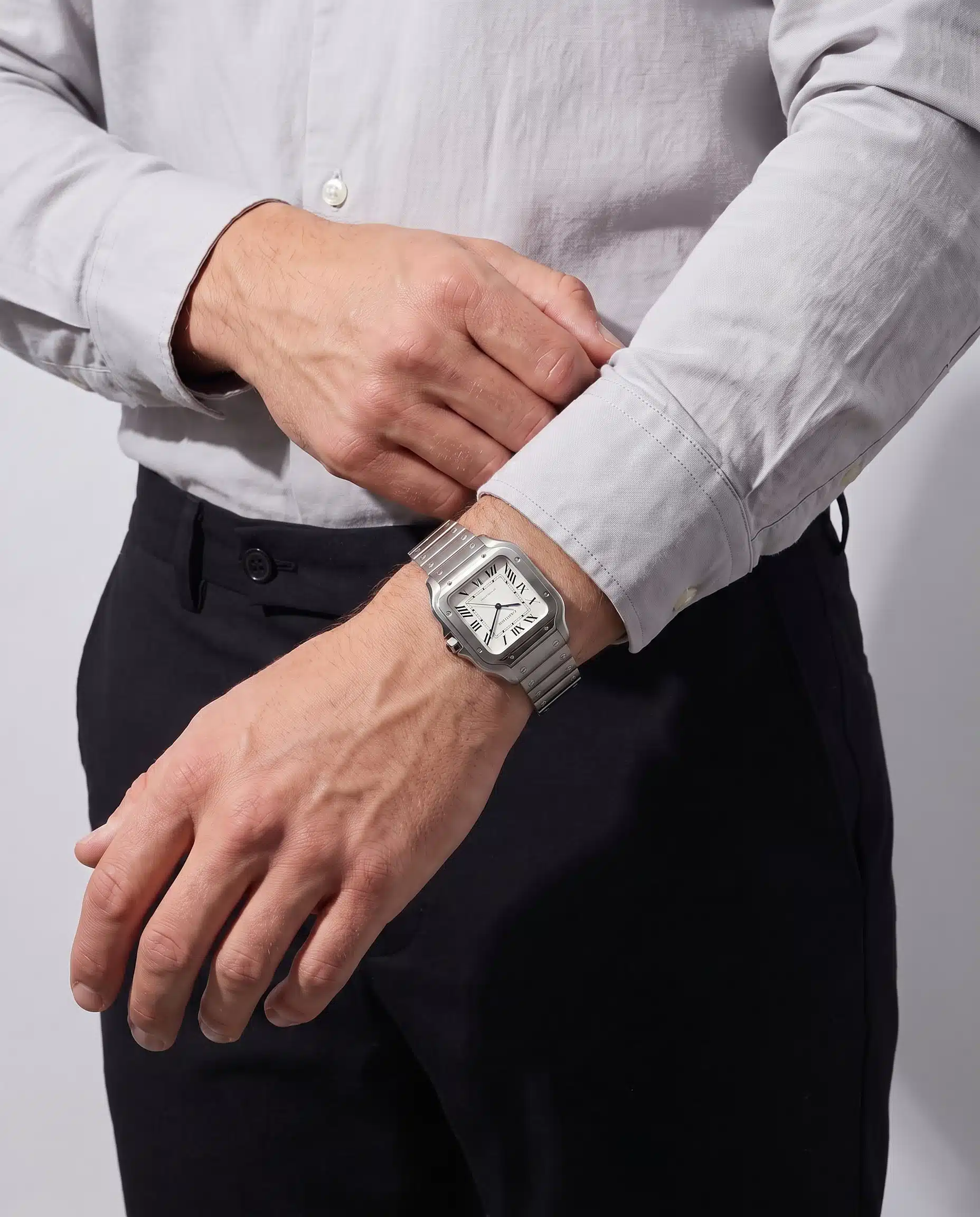
Few watches have a story quite like the Cartier Santos.
Created in the early 20th century for Brazilian aviator Alberto Santos-Dumont, the Santos was designed to allow its wearer to read the time while flying. Its distinctive square case, exposed screws and integrated-looking bracelet have since become hallmarks of Cartier’s watchmaking identity.
What makes the Santos particularly enduring is its ability to evolve without losing its character. Contemporary versions retain the defining geometry of the original while introducing modern materials, movements and proportions.
The result is a watch that feels equally at home with formal tailoring or more relaxed contemporary clothing.
Why it endures: distinctive design, historical importance and Cartier’s ability to combine watchmaking with jewellery-inspired aesthetics.
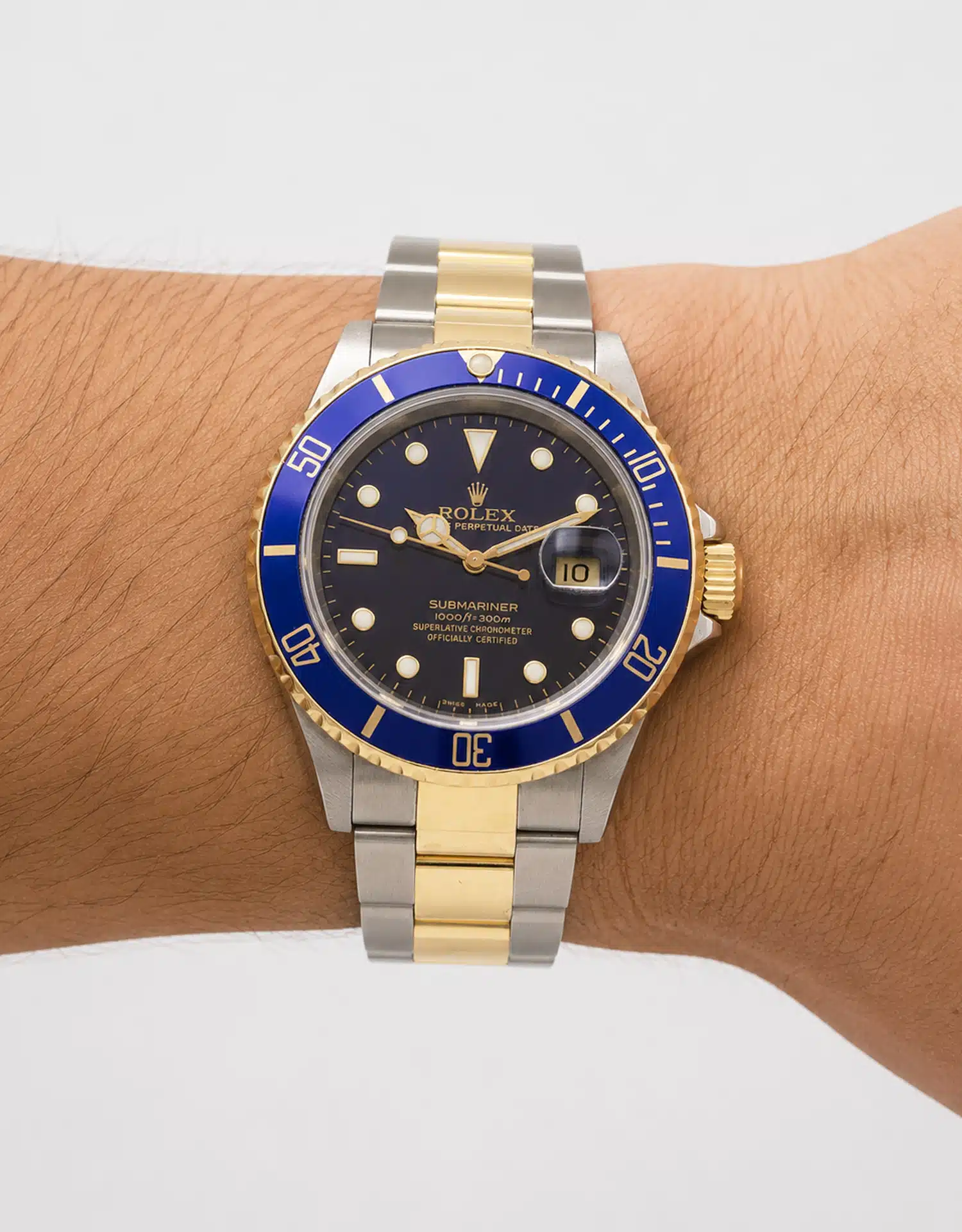 Rolex Submariner – The Definition of the Dive Watch
The Rolex Submariner is arguably one of the most recognisable luxury watches ever created.
Originally developed as a professional diving instrument, the Submariner established many of the visual characteristics that have become synonymous with modern dive watches: a rotating bezel, highly legible dial and robust water-resistant construction.
Over the decades, Rolex has refined rather than radically reinvented the Submariner. This consistency is one of its greatest strengths.
A Submariner from decades ago remains immediately identifiable as part of the same design family as a contemporary example.
Its appeal also extends far beyond diving. The combination of practicality, durability and understated luxury has made the Submariner one of the most sought-after watches among collectors and enthusiasts worldwide.
Why it endures: an instantly recognisable silhouette, exceptional practicality and decades of refinement.
The Omega Speedmaster occupies a unique position in watchmaking history.
Originally introduced as a chronograph, the Speedmaster became internationally famous through its iconic watch designs and its association with NASA’s space programme and the Apollo missions. Its reputation as the Moonwatch transformed it from a specialist chronograph into one of the world’s most celebrated timepieces.
Its design has remained remarkably consistent: a black dial, three sub-dials, tachymeter bezel and highly legible hands create a combination that is both functional and instantly recognisable.
The Speedmaster demonstrates how a watch can become iconic not simply because of its appearance, but because of the extraordinary stories associated with it.
Why it endures: historic significance, distinctive chronograph design and a direct connection to space exploration.
The Breitling Chronomat has become one of the defining watches in Breitling’s collection, combining a strong sporting character with the sophistication expected of a luxury chronograph.
Originally introduced in 1984, the Chronomat represented an important moment for Breitling. At a time when mechanical watchmaking was facing significant challenges, the launch of a bold, mechanical chronograph helped reaffirm the appeal of traditional Swiss watchmaking.
One of the Chronomat’s most recognisable features is its distinctive bezel, traditionally characterised by four rider tabs. Together with its prominent case, integrated-style bracelet and detailed chronograph dial, these elements give the Chronomat an unmistakable presence on the wrist.
Over the years, Breitling has continued to evolve the Chronomat while retaining its core identity. Contemporary models combine the collection’s distinctive design language with sophisticated mechanical movements and modern finishing, making the Chronomat equally suited to everyday wear and more formal occasions.
Its versatility is perhaps one of its greatest strengths. Unlike a watch designed exclusively for diving, aviation or formal dress, the Chronomat occupies a middle ground – offering the technical character of a sports chronograph while retaining the refinement of a luxury timepiece.
For collectors, the Chronomat also represents an important part of Breitling’s history and demonstrates the brand’s ability to create watches that are both functional and visually distinctive.
Why it endures: a recognisable design, strong mechanical heritage, sporting character and the versatility to work across generations and occasions.
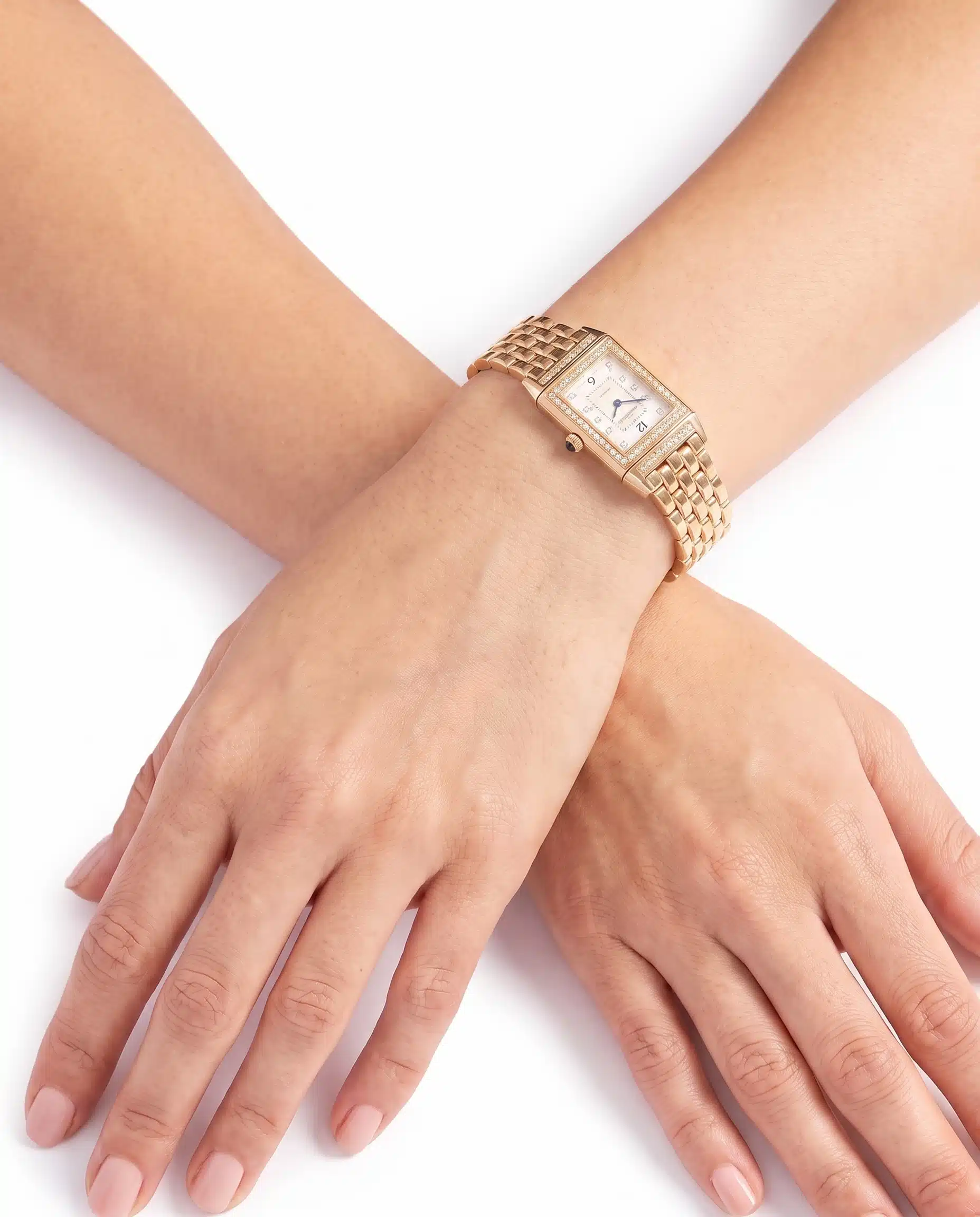
The Jaeger-LeCoultre Reverso is perhaps one of the finest examples of how an unusual practical requirement can produce an enduring design icon.
Originally developed for polo players in the 1930s, the Reverso featured a swivelling case that could be turned around to protect the watch crystal during play.
That ingenious mechanism became the defining feature of the watch.
Today, the Reverso is admired not only for its mechanical construction but also for its Art Deco-inspired rectangular case and elegant proportions. The reversible case has also provided a canvas for personalisation, engraving and artistic craftsmanship.
Few watches demonstrate so effectively that great design can remain relevant for generations.
Why it endures: an ingenious case design, Art Deco aesthetics and an unmistakable identity.
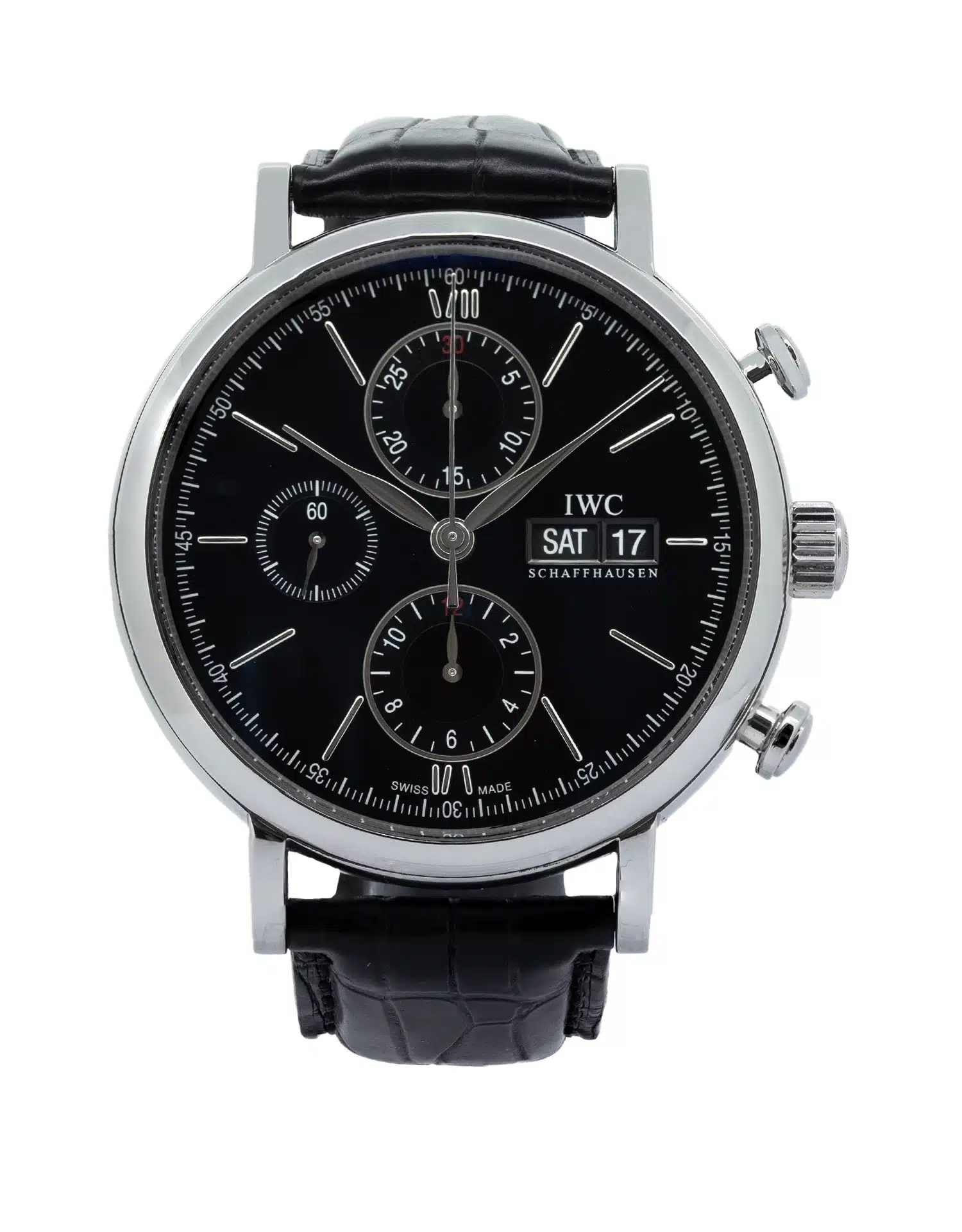
The IWC Portofino Chronograph is a superb example of how classic watch design can combine elegance, precision and everyday versatility.
The Portofino collection has become one of IWC Schaffhausen’s most recognisable families of watches, and the Chronograph is particularly admired for its balanced proportions and clean, highly legible dial.
Its design is distinctive without being ostentatious. The large, open dial, applied hour markers, slim hands and carefully positioned sub-dials create an elegant sense of symmetry, while the chronograph function introduces a practical sporting element.
One of the reasons the Portofino Chronograph has become so popular is its versatility. It can be worn with a tailored suit for a formal occasion, yet its chronograph functionality and contemporary proportions make it equally at home as an everyday luxury watch.
This one of our iconic watch designs also demonstrates IWC’s approach to watchmaking: technical sophistication is combined with a restrained aesthetic rather than unnecessary visual complexity.
For collectors, the Portofino Chronograph represents an appealing combination of heritage and modern usability. It has a strong enough identity to be instantly recognisable, while remaining sufficiently understated to avoid following short-lived fashion trends.
Why it endures: timeless proportions, exceptional legibility, refined chronograph design and the ability to transition effortlessly between formal and everyday wear.
Although the Cartier Santos, Rolex Submariner, Omega Speedmaster, Breitling Chronomat, Jaeger-LeCoultre Reverso and IWC Portofino look very different, they share several important characteristics.
An iconic watch should be recognisable without necessarily needing to see its name on the dial.
The distinctive geometry of the Santos, the rotating bezel of the Submariner, the chronograph layout of the Speedmaster and Chronomat, the reversible case of the Reverso and the elegant dial of the Portofino all contribute to a strong visual identity.
The greatest watches often began with a practical problem that needed solving.
Aviators needed accessible timekeeping. Divers needed water-resistant instruments. Astronauts needed reliable chronographs. Polo players needed protection for their watch crystals.
These practical origins helped create designs that were functional first – and iconic as a consequence.
Luxury watchmaking is constantly developing. Materials change, movements become more sophisticated and manufacturing technology advances.
Yet the world’s most successful watch designs tend to evolve carefully.
The challenge is to introduce modern improvements while retaining the characteristics that made the original watch special.
A luxury watch becomes considerably more compelling when there is a story behind it.
The Omega Speedmaster has its connection to space exploration. The Rolex Submariner has its diving heritage. The Breitling Chronomat is inseparable from aviation, while the Reverso has its origins on the polo field.
These stories give the watches an identity that goes beyond specifications.
In an industry where trends can change rapidly, truly iconic watches occupy a different position.
They are not simply fashionable for a season. Their appeal is rooted in design, craftsmanship, heritage and emotional connection.
For collectors, owning an iconic timepiece can also mean owning a small piece of horological history.
Whether your preference is the unmistakable elegance of a Cartier Santos, the robustness of a Rolex Submariner, the heritage of an Omega Speedmaster, the technical character of a Breitling Chronomat , the sophistication of a Jaeger-LeCoultre Reverso or the understated refinement of an IWC Portofino, each represents a different interpretation of what makes a luxury watch exceptional.
Ultimately, the world’s most iconic watches endure because they achieve something remarkably difficult: they become timeless without becoming dated.
Their designs are sufficiently distinctive to be remembered, yet sufficiently refined to remain relevant decades later.
That is the essence of great watchmaking.
At Luxury Watch Group, we appreciate that every collector has a different definition of the perfect timepiece. Whether you are searching for a historic classic, an everyday luxury watch or a statement piece for your collection, understanding the stories and designs behind these icons is an important part of the journey.
Because the finest watches do more than measure time.
They become part of it.
No account yet?
Create an Account