



The Language of Watches: A Glossary for New Collectors
Walk into any watch forum or dealer’s showroom and you’ll hear a language all its own — “movement,” “complication,” “bezel,” “lume.” For a beginner, it can feel like everyone else got the cheat sheet. This guide breaks down the essential vocabulary every new collector needs to understand the language of watches, then explains why buying pre-owned is one of the smartest ways to start (or grow) a collection — and where to find trustworthy secondhand pieces.
Understanding watch terms isn’t just about sounding knowledgeable. It directly affects your ability to:
Let’s get into it.
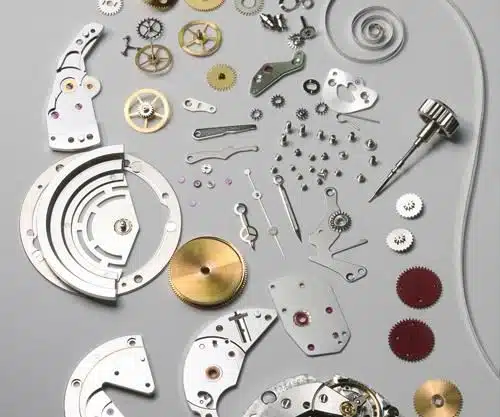
The internal mechanism that powers the watch. There are three main types:
Any function beyond simply telling the time — a chronograph (stopwatch), moon phase, date display, or GMT (second time zone) are all complications. The more complications, the more complex — and usually more expensive — the movement.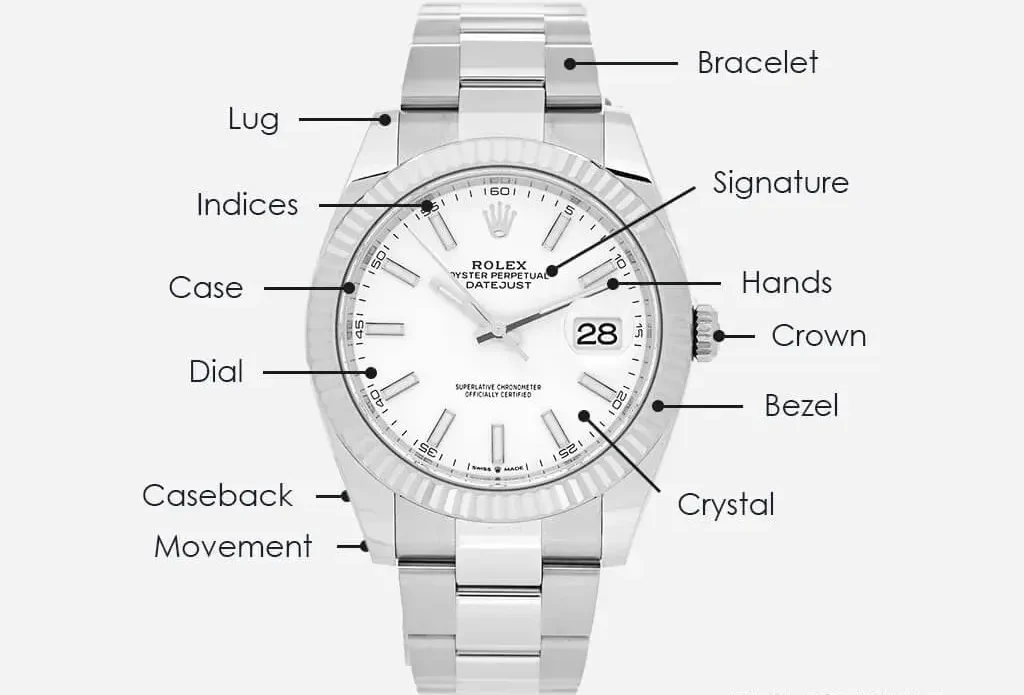
The housing that holds the movement, dial, and crystal. Case material (stainless steel, titanium, gold, ceramic) and case diameter (measured in millimeters) heavily influence price, weight, and wearability.
The transparent cover protecting the dial. Common materials:
The ring surrounding the crystal. It can be purely decorative or functional — like a rotating dive bezel used to track elapsed time underwater, or a tachymeter bezel used to calculate speed.
The watch face. Collectors pay close attention to dial condition, color, and “patina” (natural aging), since dial variants can significantly affect a watch’s value.
Luminescent material applied to hands and hour markers so the watch is readable in the dark. Older watches used radium or tritium (now largely phased out for safety and glow-longevity reasons); modern watches typically use Super-LumiNova.
Usually listed in meters (e.g., 100m, 300m). This is a resistance rating, not a certification for active diving unless a watch is specifically labeled as an ISO-certified dive watch.
A unique alphanumeric code identifying a specific model and variant. Essential for verifying authenticity and comparing exact specs when shopping secondhand.
The documented history and ownership trail of a watch — original box, papers, service records, and prior ownership. Strong provenance boosts both trust and resale value.
Industry shorthand for a watch that comes with its original box, papers (warranty card), and all accessories — as opposed to a “watch only” listing.
A watch designed to closely resemble a famous model from another brand, without claiming to be that brand. Not to be confused with counterfeits, which illegally use another brand’s actual name and logo.
Watches sold by retailers who are not officially authorized by the brand, but who source genuine, authentic stock — often at a discount compared to boutique pricing.
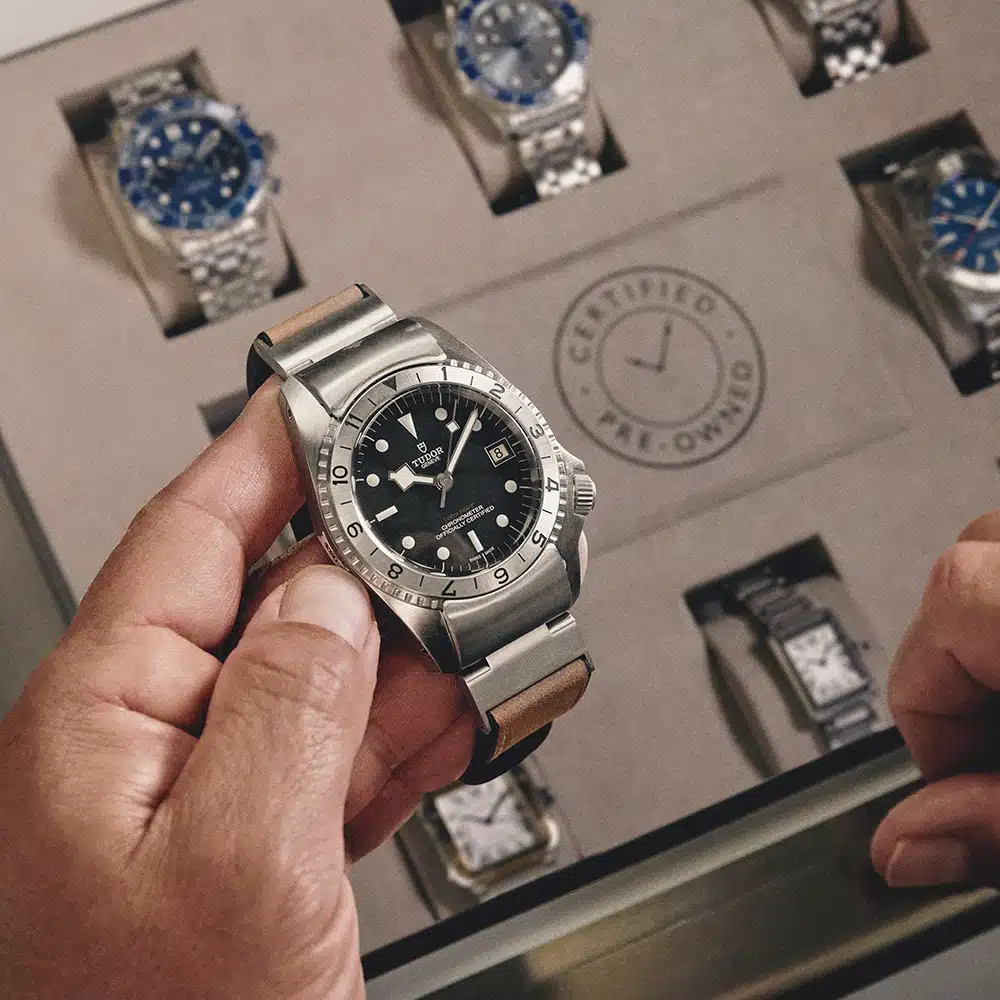
Once you know the vocabulary, the next big decision is whether to buy new or pre-owned. For most beginners, secondhand is the smarter starting point, for a few clear reasons:
1. Better value per pound spent. Many luxury watches see a price drop the moment they leave a boutique, similar to a car driving off the lot. Buying secondhand means someone else absorbed that initial depreciation — you get the same watch for meaningfully less.
2. Access to discontinued and vintage models. Some of the most interesting references in horology are no longer in production. The secondhand market is often the only route to owning them.
3. Shorter or nonexistent waitlists. Certain in-demand models can carry multi-year waiting lists at boutiques. Pre-owned dealers frequently have those same references in stock right now.
4. Lower financial risk while you learn. As a new collector, your taste will evolve. Buying pre-owned (and later reselling) tends to preserve more of your capital than buying new and reselling, since a well-chosen pre-owned watch has already stabilized in value.
5. Sustainability. Watches are built to last decades, sometimes generations. Buying pre-owned keeps well-made mechanical objects in circulation rather than encouraging unnecessary new production.
Of course, the pre-owned market comes with its own risks: authenticity concerns, undisclosed repairs, and inconsistent condition. That’s why choosing a reputable, specialist dealer matters more than almost any other decision you’ll make as a new collector.
At Luxury Watch Group, based in Brighton, we specialize in exactly this kind of dependable, well-vetted pre-owned buying experience. We deal in major names such as Rolex, Cartier, and Omega, offering both pre-owned and new watches, and we connect our customers with trusted servicing and repair partners in Brighton and London — so you have ongoing support for your watch long after purchase, not just a one-off transaction.
Buying from a specialist dealer like us, rather than an anonymous online marketplace listing, gives new collectors a few practical advantages:
As with any watch purchase, it’s worth doing your own due diligence — check reference numbers, ask about service history, and confirm return or warranty policies — but working with us takes much of the guesswork out of buying secondhand.
Learning the language of watches is the fastest way to go from feeling like an outsider to shopping with confidence. Combine that vocabulary with the value case for buying pre-owned, and a reliable specialist dealer, and you have a solid foundation for building a collection you’ll actually be proud of — without overpaying for the privilege of learning as you go.
No account yet?
Create an Account