







You might be surprised to learn that luxury Swiss watches need professional servicing every four to five years – this is the secret of how to keep your Swiss Watch perfect.
That beautiful timepiece you’re wearing—be it a Rolex, Cartier, or IWC—means more than just making a fashion statement or investment. Think of it as a sophisticated mechanism where countless tiny parts work together in perfect harmony. But these precision instruments will deteriorate without proper cleaning and maintenance, no matter how fine the Swiss craftsmanship.
Quartz watches need their batteries replaced every 2 to 5 years. Every watch needs regular care though. Your timepiece naturally collects dust, skin oils, and tiny debris that can damage its precision components.
Regular servicing keeps your watch accurate and running smoothly. It helps catch problems early before they turn serious. A professional service does more than just clean—it checks all internal components to spot any wear and tear.
We’ll share our knowledge about professional watch cleaning services and home care options in this piece. You’ll learn about the right cleaning kits and solutions. These tips will help your Swiss masterpiece last longer, whether you’re just starting your collection or you’re an experienced enthusiast.
Your Swiss timepiece needs regular maintenance to work at its best. A luxury watch’s complex mechanisms need professional care every 3-5 years. This care helps keep both performance and value intact.
Mechanical watches need servicing to prevent damage from dried oils and worn parts. These small components face huge strain while running, and friction becomes their worst enemy. A professional watch cleaning service will lubricate the bearings to stop them from drying out and damaging steel parts.
Watch problems can get serious if you ignore them. Small issues can spread damage to other parts if left alone. You could end up paying over £1000 for repairs. Your Rolex or Cartier watch might also start keeping irregular time – a clear sign you need service.
Your watch’s water resistance depends on good maintenance. Gaskets and crowns naturally wear down with use, so they need yearly checks. This becomes crucial if you spot condensation inside your IWC or other luxury timepiece.
Regular service helps protect your watch’s value. Collectors know this matters because well-maintained watches with genuine parts often keep or increase their resale value. At Luxury Watch Group, we can take in your luxury timepiece for polishing through our website, or you can contact us with queries regarding servicing. Ensuring your watch maintains pristine condition and working order is paramount.
Professional watch cleaning works better as preventive care than an expense. Your timepiece will last much longer if you use the right cleaning solution and follow what the manufacturer suggests between services.
Swiss timepieces use sophisticated water resistance systems with complex gasket networks to protect against water, perspiration, heat, and dust. Many people wrongly assume water resistance ratings show depth capability, when they actually indicate pressure tolerance. To name just one example, watches rated at 3 bar (30m/100ft) can only handle splashes and aren’t suitable for swimming.
Watch gaskets deteriorate over time, which means water resistance is temporary, not permanent. So, experts recommend annual maintenance service with complete gasket replacement before swimming season. Mechanical watches need inspection every 3-5 years because lubricants break down and create friction between delicate components.
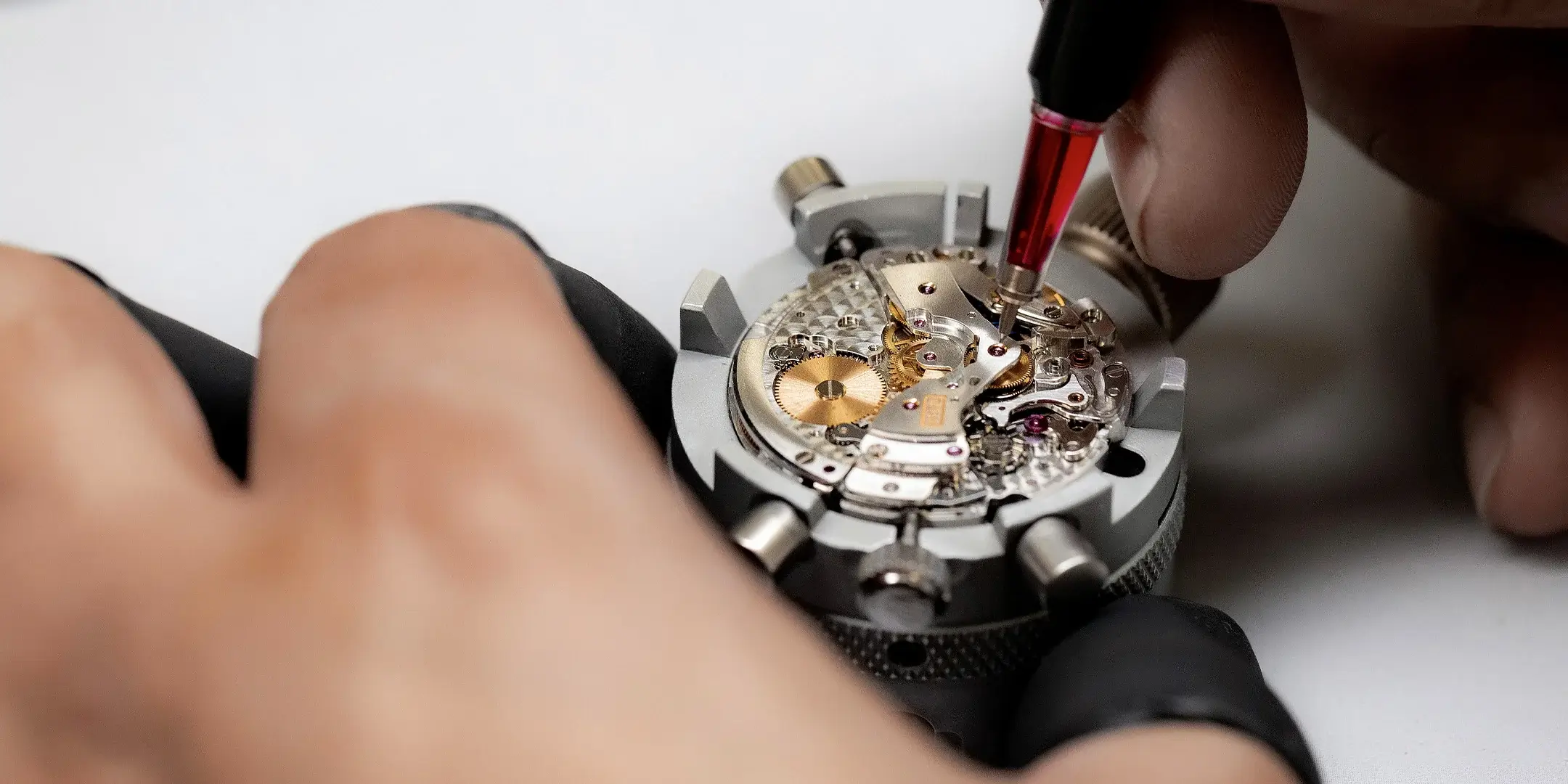
Watch cleaning is complex – this is just a part of it. Watchmakers must disassemble the movement, clean all parts in specialized chemical baths, and apply up to 8 different synthetic oils and greases. A single speck of dust can prevent proper functioning. Modern Swiss manufacturers like IWC now use special robots that apply oil to over 20 lubrication points simultaneously to ensure consistent quality.
Essential precautions to maintain water resistance:
Note that water pressure exceeds stated ratings dramatically from temperature changes, shower jets, and swimming movements.
Your Swiss watch needs both professional servicing and daily care to stay in pristine condition. Watch experts suggest a full service every 4-5 years to keep it running perfectly.
A professional service has complete disassembly, ultrasonic cleaning in special chemical baths, and lubrication with up to 8 different synthetic oils. Watchmakers test everything thoroughly. This helps you avoid repairs that can get pricey later, as experts can spot issues early.
My daily care routine involves wiping the watch with a soft microfiber cloth to remove dirt and fingerprints. A soft-bristled toothbrush works great for tough grime, especially in bracelet links. Just make sure to check your watch’s water resistance rating before using any moisture.
Your timepiece deserves proper storage too. The original box or a dedicated watch case in a cool, dry place, away from sunlight works best. Automatic watches benefit from a watch winder that keeps the movement lubricated when you’re not wearing them.
Here’s what you should never do:
Water resistance doesn’t last forever. You should test it yearly to make sure the seals stay effective. Following these tips will help keep your Swiss Watch in perfect condition.

A Swiss timepiece showcases exceptional craftsmanship and represents a valuable investment that needs proper care. This piece explores why regular maintenance plays a vital role for these precision instruments. Professional servicing at 4-5 year intervals will give your watch lasting accuracy and preserve its value across generations.
Your watch’s water resistance just needs extra care as gaskets break down naturally. You should test it yearly before swim season to protect it from moisture damage. It also helps to know your watch’s actual water resistance limits to avoid unexpected issues that might get pricey to fix.
The time between professional services matters a lot to your timepiece’s life span. You can use a microfiber cloth to wipe away oils and dirt that build up while wearing it. Smart storage away from sunlight, magnets, and chemicals will protect your Swiss masterpiece when it’s off your wrist.
Note that prevention costs less than fixing problems. The complex mechanisms in your watch work best with proper lubrication and zero contamination. Think about professional servicing as a smart investment rather than an optional cost.
Your Swiss watch does more than track time—it carries your story. Good care means this story keeps ticking with perfect precision through the years. With the right attention, you can keep your Swiss Watch in perfect condition, and this will allow these remarkable timepieces to last beyond a lifetime and become cherished heirlooms.
Enjoyed reading? You can take a look at our other blogs here
No account yet?
Create an Account